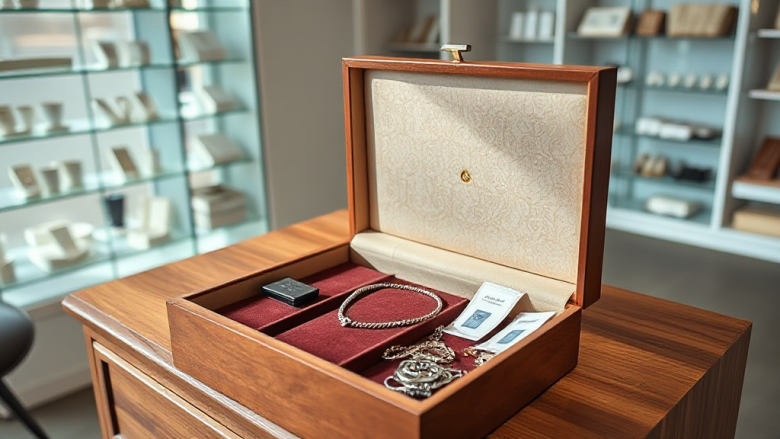
You reach for your favourite silver chain and it’s happened again: a dull yellow-grey film across the links, a dark shadow in the crevices of a pendant. Tarnish doesn’t ruin jewelry overnight, but it does ruin the moment. The good news is that knowing how to store jewelry to prevent tarnish is not complicated. It comes down to one chemical reaction and three storage habits you can set up in about five minutes.
This is the direct version. No long history of metallurgy, no twenty-item checklist. Just why tarnish happens and the storage methods that actually stop it.
Why Tarnish Happens (and Why Your Drawer Makes It Worse)
Tarnish is corrosion, not dirt. Silver reacts with sulphur compounds in the air to form silver sulphide, the black or yellow layer you see on the surface. Copper in gold alloys and brass does something similar with oxygen and moisture. The metal itself isn’t damaged in the early stages, which is why a polish usually brings a piece back. But repeated tarnish means repeated polishing, and every polish removes a thin layer of metal. Over years, that adds up.
The trigger isn’t one thing. It’s a combination: humidity, sulphur in the air, and contact with certain materials. Your bedroom drawer is often the worst place for all three. Wooden furniture and cardboard boxes release traces of sulphur and acids. A bathroom cabinet adds steam from every shower. An open jewelry dish on a windowsill gets sunlight, temperature swings and dust. Even the air in a city with heavy traffic carries more sulphur than most people realise.
Your own skin is part of the picture too. Lotions, perfume, hairspray and sunscreen leave residues that speed up the reaction. So does sweat. If you put a piece away while it’s still carrying any of that, you’re essentially sealing the problem in with it.
One more thing worth knowing: tarnish spreads by contact. A single tarnished ring sitting against a clean chain can transfer the problem. That’s why tossing everything into one box is the single worst storage decision you can make.
The Best Storage Solutions to Stop Tarnish
There are dozens of products marketed for jewelry storage. Most of them work to some degree. But only three approaches consistently deliver, and you can combine them without spending much.
1. Airtight Containers With Anti-Tarnish Liners
The core principle is simple: keep air away from the metal. An airtight container slows the sulphur reaction dramatically. Look for small zip pouches with a treated lining, or hard cases with a rubber gasket. The lining matters because anti-tarnish fabrics are impregnated with compounds that absorb sulphur before it reaches the metal.
If you don’t want to buy specialty pouches, a plain airtight food container works surprisingly well. Line it with a piece of anti-tarnish cloth or even acid-free tissue. Put each piece in its own small pouch first, then place the pouches in the larger container. This double layer gives you the best protection for the least money.
A word of caution: airtight doesn’t mean wet-proof. If you seal a piece away while it’s damp or still warm from your skin, you’ve created a mini greenhouse. Let everything reach room temperature and dry completely before it goes in.
2. Anti-Tarnish Strips and Silica Packets
Anti-tarnish strips are small paper squares treated to absorb sulphur and other corrosive gases. You drop one into a jewelry box, a drawer or a pouch, and it quietly does its job for a few months. They’re cheap, invisible and effective. Replace them every three to six months, or sooner if you live in a humid climate.
Silica gel packets handle the moisture side. Moisture alone doesn’t tarnish silver, but it accelerates the reaction and encourages the green film you sometimes see on copper and brass. Toss a couple of silica packets into your storage container. If you have a stash from shoe boxes or electronics packaging, they work fine. Just check that they haven’t already absorbed their limit, which you can usually tell by whether the beads are still loose or have clumped.
Combining strips and silica gives you the best of both: sulphur control and moisture control. That pairing is the closest thing to a set-and-forget solution.
3. Individual Compartments, Not a Pile
This is the step most people skip, and it’s the one that matters most. Jewelry should never touch other jewelry during storage. Metal-on-metal contact causes scratches, and a tarnished piece can seed tarnish on its neighbours. Chains tangle, clasps catch, and gemstones chip each other.
You don’t need a custom velvet tray. Small cotton pouches, soft cloth wraps, or even individual zip bags will do. If you’re using a jewelry box with slots, make sure the slots are lined and that pieces aren’t pressing against each other. For necklaces, hang them or lay them flat in a single layer rather than coiling them tightly, which traps moisture in the coil.
Rings and earrings can share a compartment if they’re each in their own pouch. Bracelets should be separated because they’re the most likely to scratch and the most likely to tangle.
What to Avoid
Some storage materials actively cause tarnish. Wool, rubber bands, latex, cardboard and some untreated woods release sulphur or acids. Plastic wrap and PVC bags can trap moisture and off-gas chemicals. Newspaper and printed paper are acidic. If you’re storing jewelry in any of these, you’re working against yourself.
Also avoid storing jewelry in the bathroom. Even with an airtight container, the humidity in that room is high enough to cause problems over time, and the steam from a hot shower will find its way into anything that isn’t perfectly sealed.
Troubleshooting: Common Questions About Jewelry Storage
My jewelry tarnished even though I stored it in a box. Why?
Three likely culprits. First, the box isn’t airtight, so air is still circulating. Second, you stored the piece while it was still carrying lotion, perfume or moisture from your skin. Third, the box itself is made from a material that releases sulphur, such as untreated wood or cardboard. Swap to an airtight container with an anti-tarnish liner, and make sure pieces are clean and dry before they go in.
How often should I replace anti-tarnish strips and silica packets?
Anti-tarnish strips typically last three to six months. Silica packets last until they’re saturated, which depends on your local humidity. In a damp climate, check them every couple of months and replace when the beads clump or the packet feels heavy. If you’re in a dry area, they can last much longer. A simple habit is to replace both when you change your clocks for daylight saving, so it happens twice a year without you having to remember.
Does storing jewelry in a safe or bank box prevent tarnish?
A safe slows tarnish because it limits air exchange, but it doesn’t stop it entirely. If the safe is in a humid room, moisture can still be an issue. Add anti-tarnish strips and silica packets inside the safe, and keep pieces in individual pouches. The same rules apply whether the container is a shoebox or a vault.
Can I store silver and gold jewelry together?
You can, but only if each piece is individually wrapped. Gold doesn’t tarnish in the same way silver does, but the copper in gold alloys can react, and a tarnished silver piece can transfer sulphur to whatever it touches. Separate pouches solve the problem. If you’re short on space, at least keep silver and gold in different compartments.
What’s the fastest fix if a piece has already tarnished?
A silver polishing cloth handles light tarnish in seconds. For heavier build-up, a paste of baking soda and water applied with a soft cloth works on silver, but skip it on plated pieces and gemstones. Rinse and dry completely before storing. Then fix the storage setup so you’re not repeating the job next month.
The whole system takes minutes to set up and almost no effort to maintain. Clean pieces, dry them, seal them away from air, and separate them from each other. Do that, and the next time you reach for that chain, it’ll look the way you remember.