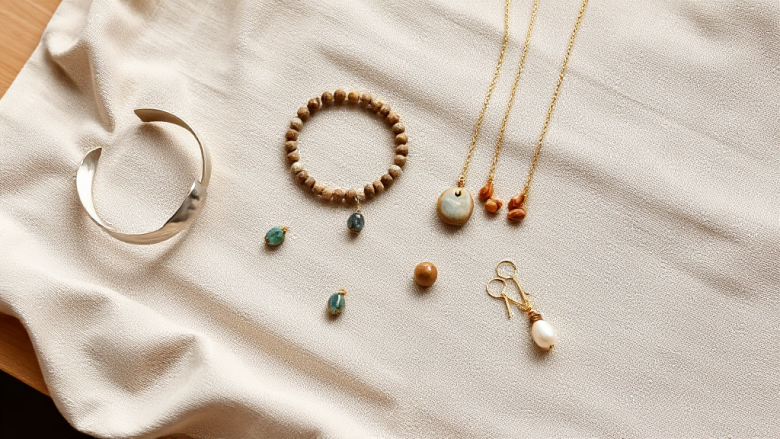
Finding a gift that feels genuinely personal is harder than it should be. Mass-produced pieces are everywhere, and after a while they all blur into the same predictable shapes. Handmade jewelry gift ideas solve this problem in a quiet way. A piece shaped by a maker’s hands carries intention — the small irregularities, the chosen stone, the hours spent at a workbench. It says you thought about who they are, not just what was on offer. This guide groups handmade jewelry gift ideas by the personality of the person you’re buying for, because the best gift is the one that already feels like them.
For the Minimalist
Minimalists are the easiest and hardest people to buy for. They want fewer things, but each thing must be right. The trick is to look for restraint in design and quality in material. A handmade piece that sits quietly on the body will earn its place in a small collection.
Skinny hammered stacking rings. A single thin band in recycled gold or brushed silver, with a subtle hammered texture, is the kind of piece a minimalist wears every day. Buy two or three and they can stack them or wear one alone. Because each ring is shaped by hand, the texture varies slightly — a small detail that keeps it from looking like something from a chain store.
A single-stone pendant on a fine chain. Look for a small, clean cut — a tiny moonstone, a flat labradorite, a plain silver disc. The point isn’t sparkle; it’s a single considered object at the collarbone. Ask the maker about the stone’s origin if you can. Minimalists tend to care about where things come from.
Simple bar earrings. A slim vertical bar, no more than two centimeters, in matte brass or sterling silver. They read as architectural rather than decorative, which is exactly the register minimalists tend to dress in. Skip anything with dangling elements or heavy texture.
A thin cuff bracelet. Open cuffs are forgiving on sizing, which makes them a safer gift when you don’t know a wrist measurement. A hand-forged cuff with a soft curve and no engraving feels both modern and timeless.
One practical note: minimalists often prefer pieces they can wear in water, at work, and to bed without thinking. Ask the maker whether the finish is durable enough for daily wear. A plated piece will wear through; solid silver or gold-filled will hold up.
For the Bohemian
Bohemian style rewards texture, color, and a bit of drama. This is the person who layers rings, mixes metals, and treats jewelry as part of an outfit rather than a finishing touch. Handmade work suits them perfectly, because artisanal pieces tend to have the organic, imperfect quality that mass production can’t fake.
Long beaded necklaces with mixed stones. Think turquoise, carnelian, freshwater pearl, and wood beads strung together in a hand-knotted strand. The mix of sizes and finishes is the point. A necklace like this can be worn long over a dress or doubled up for a shorter look, which makes it endlessly wearable.
Statement earrings with natural materials. Raw-cut gemstone drops, carved bone, or hand-shaped polymer clay in warm earthy tones. Bohemian style leans into scale, so don’t be shy about size. A maker who works with clay or resin will often produce pieces in small batches, which means the pair you buy is unlikely to turn up on anyone else.
Wide leather or cord bracelets with metal accents. A hand-cut leather band with a hammered brass clasp, or a waxed cotton cord strung with a single charm. These pieces take on character over time, which is part of their appeal. Look for vegetable-tanned leather if you want it to age well rather than crack.
Anklets with small charms. An underrated gift. A simple beaded anklet with a tiny bell or coin charm feels personal and a little unexpected. It’s also an easy piece to size, since most anklets use adjustable closures.
When buying for a bohemian, ask about the stones. Many handmade makers can tell you exactly where a gemstone came from and what it’s called. That story is often half the gift.
For the Romantic
The romantic wants jewelry that carries feeling — a piece connected to a moment, a name, a date, or a person. Handmade work is a natural fit here, because many independent makers offer customization that big retailers simply can’t.
A hand-stamped name or date necklace. A small disc or bar stamped with initials, a wedding date, or coordinates. The stamping is done by hand, so letters sit slightly unevenly — and that’s the charm. It reads as made-for-you rather than ordered from a catalog.
Birthstone or birth-flower jewelry. A pendant or ring set with the recipient’s birthstone, or a small hand-painted birth flower charm. If you’re buying for a new mother, a piece that combines a child’s birthstone with her own is almost always a hit.
Pearl drop earrings. Freshwater pearls are affordable, varied in shape, and endlessly classic. A handmade pair with baroque pearls — the irregular ones — feels more personal than a matched set. Look for pearls set on hand-formed wire rather than glued into a factory finding.
A locket or keepsake pendant. A small hinged locket that can hold a photo, a lock of hair, or a folded note. Handmade lockets often have simpler, more elegant closures than vintage versions, and they’re built to be opened and worn rather than stored away.
If you’re customizing, order early. Hand-stamped and engraved pieces usually take longer than ready-made items, especially in the weeks before a holiday. A maker who rushes is a maker who makes mistakes.
For the Eco-Conscious
For someone who cares about where things come from, handmade jewelry is often the easier ethical choice — but not automatically. Small-scale production uses less material and energy than factory output, and independent makers usually know their supply chain. Still, it’s worth asking a few questions before you buy.
Recycled metal pieces. Many independent jewelers now work primarily in recycled sterling silver, recycled gold, or upcycled brass. The metal is refined and re-formed rather than newly mined, which reduces the environmental footprint considerably. Ask the maker to confirm the source; most are happy to explain.
Vintage and repurposed stone jewelry. A pendant set with a stone salvaged from an old brooch, or a ring made from a reworked heirloom. These pieces give new life to materials that already exist, and they tend to be one-of-a-kind.
Locally sourced, small-batch pieces. Buying from a maker in your own region cuts shipping emissions and supports a local craft economy. It also means you can often meet the person who made the piece, which is a gift in itself.
Natural, untreated materials. Wood, seeds, linen cord, and undyed leather are renewable and biodegradable. If the recipient avoids synthetic finishes, look for pieces where the maker has left the material as close to its natural state as possible.
One caution: “eco-friendly” is not a regulated term in jewelry. A maker who uses recycled silver in one collection may still use conventional materials in another. If sustainability matters to the recipient, ask specifically about the piece you’re buying, not the brand as a whole.
A Short Buying Checklist
Before you commit, run through these points. They’ll save you from a gift that misses the mark.
- Know the size, or choose adjustable. Rings and cuffs are the riskiest. If you don’t know the measurement, an open cuff, an adjustable chain, or a brooch is safer.
- Check the metal and finish. Solid silver and gold-filled pieces last; plated pieces wear through. Ask how the maker recommends caring for the finish.
- Ask about turnaround and shipping. Handmade often means made-to-order. Confirm the timeline before you promise a date.
- Request the maker’s story. A short note about who made the piece and where the materials came from turns a nice object into a meaningful one.
- Think about their daily life. A nurse, a swimmer, and a sculptor need different things from jewelry. Match the piece to how they actually live.
Frequently Asked Questions
How do I know if handmade jewelry is good quality?
Look at the finish and the findings. Well-made pieces have smooth edges, secure clasps, and clean solder joints. Ask what metal is used — solid sterling silver, gold-filled, or solid gold will outlast plated alternatives. A maker who answers questions clearly is usually a maker who takes pride in the work.
Is handmade jewelry more expensive than mass-produced jewelry?
Often, yes — but not always. You’re paying for the maker’s time, not just materials, so a simple handmade silver ring may cost more than a similar factory piece. That said, handmade jewelry often holds its value better and lasts longer, which offsets the upfront price over time.
What if I don’t know the recipient’s size?
Choose adjustable pieces. Open cuffs, sliding-clasp bracelets, long chains, and anklets with extenders all work without an exact measurement. Brooches and hair accessories are also size-safe. If you’re set on a ring, ask a friend or family member for the size, or buy from a maker who offers resizing.
Can I customize a handmade piece?
Usually, yes. Many independent makers offer engraving, stamping, stone swaps, and chain-length adjustments. Custom work takes longer and sometimes costs more, but it’s the fastest way to turn a nice piece into a personal one. Ask for a proof or photo before the final stamping if the piece includes text.